

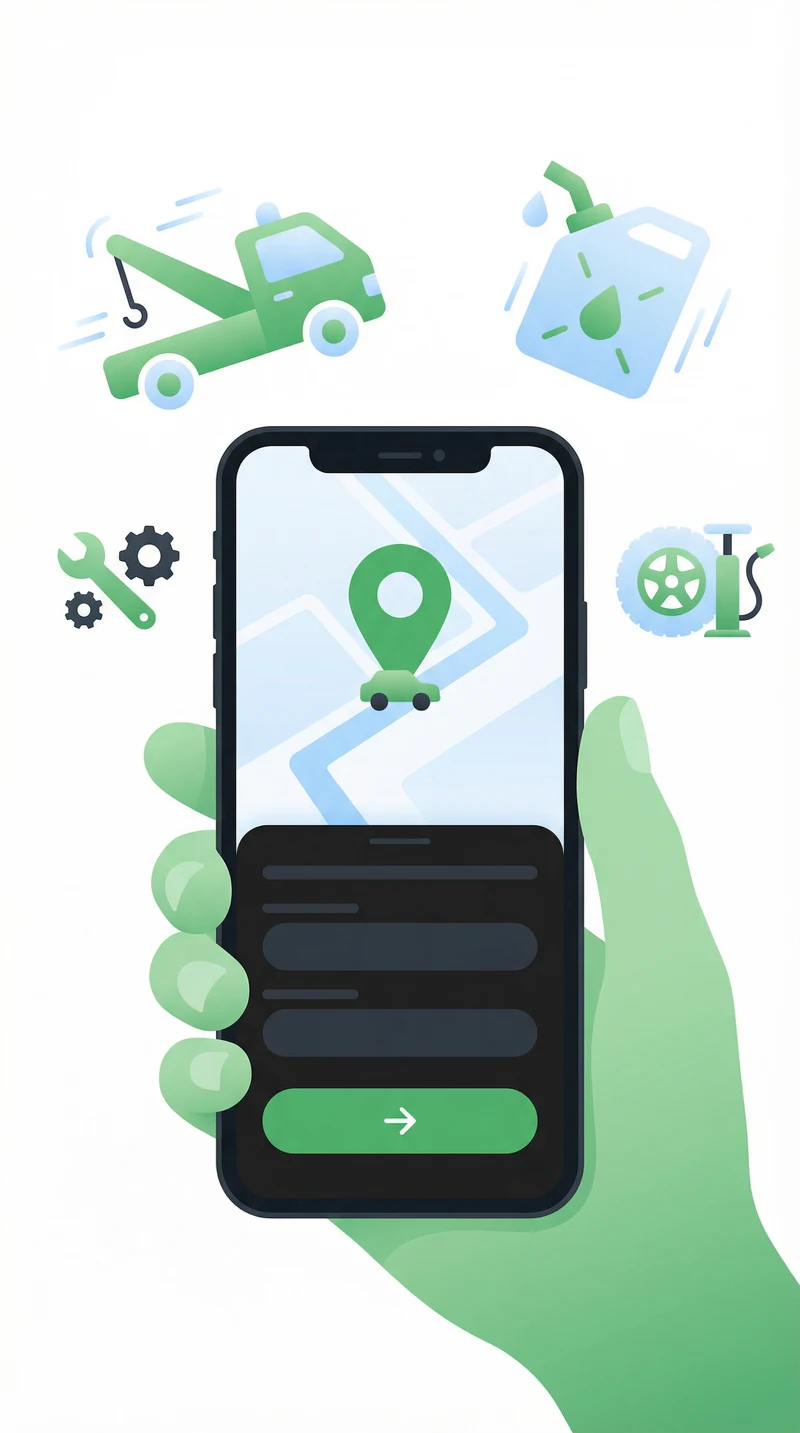
Help on demand
Location-aware requests connect motorists with nearby roadside professionals, while passenger transportation provides another way to keep moving.
On The Way brings roadside assistance and passenger rides into one mobile experience: request a Hero, follow their arrival with TripTrack, stay connected, and complete the service with integrated payments.


Roadside assistance, Live tracking, Mobility
Flutter, Dart, Firebase, Google Cloud, Mapbox, Next.js, Stripe Connect
softwares · apps
Roadside assistance · Mobility · TripTrack
Location-aware requests connect motorists with nearby roadside professionals, while passenger transportation provides another way to keep moving.
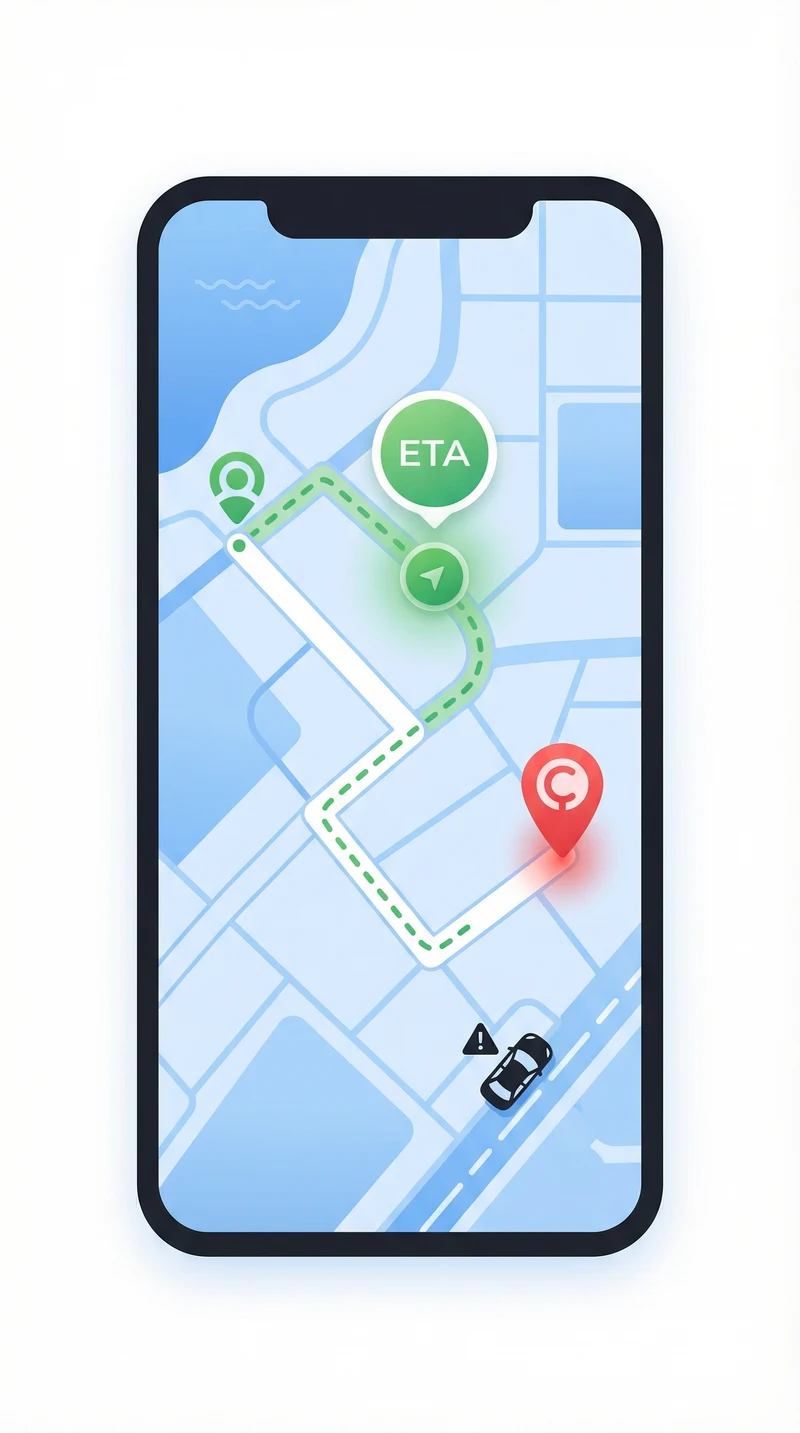
Mapbox-powered GPS, route guidance and changing ETAs make the approaching Hero’s journey visible.

In-app communication, service updates, digital receipts and provider payouts connect the request to its resolution.
Experience walkthrough
Follow the product journey from a location-aware request to the completed service.
A motorist shares where help is needed. The request gives dispatch and the provider a common destination.
A breakdown leaves a driver with immediate questions: where am I, who is coming, and how long will I wait? OTW organizes the experience around those moments, bringing location, dispatch and progress into the same mobile journey.
The new product website brings roadside assistance and passenger rides together. Motorists request help, follow their Hero’s arrival and continue their journey. The public site currently invites early access; the engineering case study describes the wider platform.
TripTrack is the location and navigation layer behind the waiting experience. Mapbox supports the map, route presentation and navigation, while GPS updates place the approaching provider in the context of the customer’s request.
The TripTrack integration covers turn-by-turn guidance, foreground and background location, geofencing, ETA handling and traffic-aware route adjustments. These details matter together: a moving marker should help a motorist understand where assistance is and what happens next.
For drivers, the flow begins with sharing the service location and continues through provider updates and in-app messaging. For Heroes, localized requests, job queues and navigation turn that request into actionable work.
The handoff connects customer confidence with provider coordination. Both sides need a consistent view of the active job as it moves from a request to arrival and completion.
The payment scope includes card processing, Apple Pay, digital receipts, refund handling and Stripe Connect provider payouts. Customer payment and provider earnings are different parts of the same service lifecycle.
Keeping them connected gives the platform an operational record beyond the map: which service was requested, how its payment progressed, and what the provider should receive.
A Next.js operations dashboard supports provider onboarding, verification workflows, request monitoring, user management and customer support. Dispatch visibility gives the team context when a motorist or Hero needs help.
Flutter and Dart serve the mobile clients. Firebase and Google Cloud support identity, job data, synchronized events, push notifications and media, with Mapbox powering the TripTrack experience.
The product direction is practical: reduce uncertainty during a stressful roadside event. Clear request states, readable maps and timely updates carry more value here than an elaborate screen that hides what the driver needs next.
This is the kind of on-demand platform engineering that connects a consumer app, a provider workflow, live location and back-office operations into one service.


